Monday, 30 May 2016

Bernie Sanders and his supporters need to rally behind Hillary Clinton.

For the greater good of the country, the Sanders brigade need to hold their noses and vote for Hillary

Hillary Clinton is the Democratic nominee. I’m not even going to use qualifiers such as “all but confirmed” or “as good as”, because the numbers speak for themselves: Clinton has 2,383 delegates (the winning threshold) to Bernie Sanders’ 1,569 (814 short). It’s a matter of when and not if. Donald Trump already has the GOP nomination. The Democrats need to clarify their position, and soon.

No one doubts that Bernie Sanders has put up a good fight. Like many others, I predicted an easy path to the nomination for Clinton, but Sanders mixture of radicalism and populism has kept the race wide open for most of the campaign. The inconvenient truth for Sanders loyalists, however, is that Clinton has a significantly higher percentage of the popular vote than the Vermont senator (granted, she had more votes than Obama in 2008, but it’s still a sign that Sanders isn’t actually the overwhelming favourite for Democrats). Worryingly, the longer the race drags on, the more beneficial it is to Donald Trump.

Perhaps the UK polling predictions of 2015 have made me more sceptical about polling reports, but I don’t believe the following polling forecast for a second: that Bernie Sanders would beat Donald Trump while Clinton would lose. I’m not just advocating a vote for Hillary in a Presidential election because it’s better than voting for Trump; I genuinely believe that she’d make a good President, and Sanders wouldn’t. When watching debates between Clinton and Sanders, the Vermont senator obviously has the upper hand in terms of playing to the crowd, but like Jeremy Corbyn in the UK he is promising the world with no hope of delivering it. Too many people are ignoring the simple fact that both the House and the Senate are controlled by the Republican Party. Does Bernie Sanders seriously think that he can deliver on his promises with the troublesome and pernickety GOP?

Bernie’s run for office has certainly helped the democratic process. It’s stopped Hillary from simply being ‘anointed’, and has pushed her in to action on certain issues. My fear is not just that this campaign will drag on, but that the supporters of Bernie will not vote for or support Hillary when she gets the nomination out of spite. Any act such as this which could make a Donald Trump victory more likely is one that should be avoided at all costs. Trump’s outrageous quotes and proposals are well documented, and don’t need repeating here. I genuinely shudder at the thought of Trump giving his inauguration speech in January 2017. Why gamble with that?

There’s a place for idealism in politics, but it inevitable has to be tempered with pragmatism. Hillary’s ‘incrementalism’ may be groaned at, but until the Democrats are in a position to control both Houses of Congress, it’s a necessary evil. America deserves better than Donald Trump. I don’t believe that Bernie Sanders would run as a third party candidate, but if he did it would be the death knell for a Democratic win this year.

Bernie Sanders has put up a courageous and noble fight, but it’s time for him and his supporters to get their acts together. The real enemy is Donald Trump, not Hillary Clinton.


Picture copyright: thehill.com

Sunday, 20 March 2016

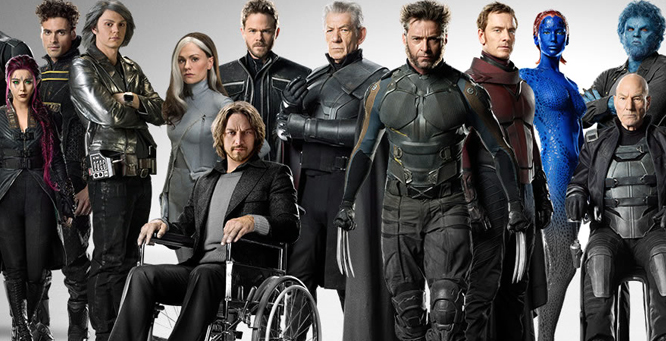
Societal reflections: X-Men


I caught the boat very late on the X-Men film series, only watching them for the first time in the summer of last year. I’ve no doubt irritated many people (“how good are the X-Men films?” “We know, we watched them 15 years ago…”), but apart from being great films they also offer some great themes and concepts. If we discovered mutants in our society today, how would we (and they) react? Would there still be hostilities?


All of this is, of course, hypothetical. It’s difficult in some respects to gauge the potential level of hostility, but at best I think the human race would still be suspicious. Donald Trump wants to build a wall in Mexico to keep out illegal immigrants: imagine what he’d think of mutants? Given the abilities of many mutants in the X-Men franchise, you can imagine politicians of all stripes being suspicious. 


In the UK, I can imagine Nigel Farage and UKIP getting straight on it. “These mutants are coming over here, taking our jobs...I mean abilities...and thirty million of them are coming from Romania. The EU is clearly doing a cover up operation, and Jean-Claude Juncker is clearly a mutant…”. The Conservatives would want to limit mutants to the “tens of thousands”, whilst Boris Johnson would have a field day trying to remember the names of Erik Lehnsherr, Ororo Monroe and Raven Darkholme. 


The above paragraph was satirical fun. However, there would be some serious soul searching in the event of mutants existing. Given the abilities of the likes of Charles Xavier, Magneto and Mystique, there would be legitimate concerns over civil liberties. We would recoil at the thought of someone being able to read minds or influence people. Imagine trying to lock up someone who can manipulate magnetic fields, or someone who can shapeshift into the likeness of anyone? 


The effect could be a never-ending cycle: mutants lash out because they feel threatened by humans, and vice versa. It would need the integrity and intelligence of someone like Charles Xavier to build bridges on both sides, but in that context it could be the humans turn to harm civil liberties; I can’t imagine authoritarian regimes in the world being happy with Professor X having freedom. Positives would have to be stressed on both sides. Imagine (humanely) harnessing Wolverine’s regenerative abilities to ease the strain on the NHS? Perhaps Storm could create weather patterns to provide water for drought-stricken countries? I can imagine leading authorities wanting to use Professor X for infiltrating the intelligence of terrorists by using Cerebro. The potential is clear.


Nevertheless, there’s no guarantee that mutants would be on board for being ‘used’ in this way. Magneto was based on Malcolm X, and there’s little doubt that there would be a real world equivalent of both. Depending on mutant numbers, there could even be political insurgencies in certain countries (the ‘Brotherhood of Mutants’ certainly sounds like a political party). Perhaps there could even be a mutant independence movement?


Human nature can certainly be cruel. I’m sure we’d all love to think that we wouldn’t act like a Senator Kelly or William Stryker if mutants did exist, but in practice I’m sure we’d at the very least be cautious. I’d like to hope that we wouldn’t choose divide and rule, but rather would accept one another as equals (I’m sorry that sounds cheesy). However, even everyday life could be altered drastically; imagine a mutant with Charles Xavier’s abilities sitting a GCSE exam, or a Magneto-like figure who is frustrated with a traffic jam on the way to work? 


I don’t think I’ve done enough justice to this hypothetical topic. There are so many variables that come into play, and so much is dependent on how each side would react. The X-Men films are probably pretty accurate depictions of what would happen if mutants existed: human suspicions of mutants would lead to mutants lashing out, whilst peaceful mutants acting for the greater good would help to convince some humans that they can coexist with mutants. What is clear is that the X-Men series has clear allegories about human behavior and the treatment of minorities: you would hope that humans would ultimately be compassionate and reasonable in the event of mutants reaching out.

Thursday, 28 January 2016

Inverted snobbery on education


I couldn’t help but groan when I heard of the petition against Damian Lewis attending the 50th anniversary of Acland Burghley comprehensive school in London. I believe that it should be about where someone is going in life, not where they’ve come from. By trying to take a stance against Lewis’ Eton-educated background, the signers of this petition have become snobs.

I hate to play the ‘I went to a comprehensive’ card, as Owen Jones often does. I’m very proud of my schooling, and I consider it a badge of honour because of the quality of teaching that I had there, not because I think it gives me a pass to talk about social justice or inequality. I’m not better qualified to talk about abstract concepts like ‘fairness’ and ‘opportunity’ just because I went to a comprehensive, otherwise I’m no different from the “reproduction of privilege and inequality in the UK” that the petition attacks Lewis for.

Personally, I’d be chuffed if an actor of Damian Lewis’ calibre came to my old school to give a talk. I think some people use the educational background of an individual very elastically indeed to suit their own arguments. David Cameron would be an easy target; “of course he hates the poor, he’s from a privileged background”, yet the same people who make that argument would never say “Clement Attlee did so much for this country; it’s just a shame that he went to a private school”. Arguments could be made about having less empathy due to a privileged background, but I believe that it is a separate debate (and one that can be unfairly skewed).

Kudos must go to Headmaster Nicholas John for refusing to bow to pressure. The assertion in the petition that Damian Lewis is a “wholly inappropriate choice” is lamentable. I think the argument is lost twofold; if you take an absolutist position that anyone from a private school background would be ‘wholly inappropriate’ for these kind of events, then in theory should David Cameron not visit any secondary schools (and therefore just open himself up further to any accusations that he doesn’t care)? If you take an elastic position on the subject, then you’re open to the double standards that I’ve listed above.

I’m as uncomfortable as anyone with the tendency for private schools to dominate in the social mobility and employment stakes. That doesn’t mean that we should succumb to snobbery, the very vice that this petition criticises Eton for. There are solutions to tackling inequality and to levelling the playing field. Refusing people the right to speak at events because of their background is not one of them.

Friday, 22 January 2016

John Williams: My top 5 themes


John Williams is, quite simply, a genius. He has composed some of the most iconic film scores, and his music is synonymous with the films that he has scored for. It’s surely the sign of a great composer that their music is subject to association of thought. Darth Vader? The Imperial March will immediately come into your head. Harry Potter? The magical tones of Hedwig’s Theme will sound in your head. Indiana Jones, Superman, Jaws...the list goes on. 

I have crudely assembled my own personal top five favourite John Williams film scores. For the musical experts out there, I apologise for my less than eloquent descriptions.

5) The Raiders March: Indiana Jones

This theme just feels so appropriate for the genre and era that it is set in. Indiana Jones is a swashbuckling hero, and Harrison Ford deserves a swashbuckling leitmotif. The theme was originally in two parts, but director Steven Spielberg asked for a combined result instead. John Williams doesn’t ever shoehorn in The Raiders March (which must be tempting), and it feels epic hearing it in multiple contexts; when Indy and company are heading off into the sunset on horseback (Last Crusade), or when they’re beating up the bad guys against the odds (Temple of Doom). I even liked it during the end scene of Kingdom of the Crystal Skull (time to put the tin hat on: I actually didn’t mind the fourth one).

4) Star Wars main theme: Star Wars

My boyish excitement was alive and well when I went to watch The Force Awakens. Seeing “A long time ago, in a galaxy far, far away…” light up on the big screen massively heightened my anticipation for the opening notes of the Star Wars main theme. The tune is so recognisable that the vast majority of non-fans can still place the theme to the film. This theme perfectly sets the scene and hints at the adventure to come, and I love the continuity of having the opening crawl of text (accompanied by this theme) throughout the entire franchise. Imagine hearing a rousing rendition of this at a huge concert hall!

3) Journey to the Island: Jurassic Park

This theme is played throughout the entire Jurassic Park franchise, and is otherwise recognised when played in the first film as the helicopter approaches Isla Nublar (“you’ll recognise it when you hear it”). I love how brash and grand the spectacle of it is, which is appropriate given that there are living, breathing dinosaurs on show. I feel that this theme neatly encapsulates how Jurassic Park very much isn’t a horror/blood and gore film. There’s a triumph to this piece of music; just think of the T-Rex v Raptors scene in the first film. My one regret with it is that it’s only used very briefly in Jurassic World (for a helicopter scene, of course), but thank goodness that successive composers (after The Lost World: Jurassic Park) have stuck with it. 

2) Jurassic Park theme: Jurassic Park

A contrast to the Journey to the Island theme (especially when you hear the soft piano version). I think it captures the majesty and wonder of the dinosaurs, and is a grand theme for when Dr Grant and company first see a Brachiosaurus in the park. It also settles the pace down after the T-Rex attack, when Alan, Lex and Tim find shelter in the trees amongst the Sauropods. I did have a little lump in the throat when the theme first started up in Jurassic World as the tourists approach Isla Nublar, and the notes to the theme are hinted at beautifully throughout the film. I love each version of it, whether it’s the poignancy of the slow tempo and soft rendition or the building crescendo of the original use of the theme.

1) Binary Sunset/The Force theme: Star Wars

I always get goosebumps whenever I hear this beautiful piece of music. I still get goosebumps even when hearing it on the Family Guy spoof of A New Hope. It’s the most common theme throughout the Star Wars films, and rightly so. It’s first played in A New Hope when Luke looks at the two suns from his home in Tatooine, frustrated at being stuck on the desert planet. Whilst the notion of isolation and frustration is the first association of the theme, I think part of what makes it so special is that it can mean different things to different people (sorry if that’s a horrible cliché). It’s played in various contexts of the franchise, such as Obi Wan’s imminent victory over Darth Maul in The Phantom Menace or Han Solo’s “it’s true; all of it” speech about the force in The Force Awakens. The poignancy of the theme is what sticks with me, and it always seems to go hand in hand with the more emotional moments in the franchise. I think I have something in my eye whenever it plays...


Honourable mentions:

Hedwig’s Theme: Harry Potter

It was hard to omit this one, especially as it was a classic of a theme to grow up with. Once again, John Williams perfectly composes a genre-appropriate musical cue.

The Imperial March: Star Wars

Darth Vader’s hugely famous leitmotif was perhaps too obvious an entry to put into my top five (but it’s still a great theme).

Duel of the Fates: Star Wars

One of the better products of the prequel trilogy, and the vocals are fantastic. John Williams’ scores cannot be faulted in George Lucas’ very flawed prequels, and this theme is part of the only cool bit in The Phantom Menace: Obi Wan Kenobi and Qui-Gon Jinn taking on Darth Maul.

Friday, 15 January 2016

It'll take more than rhetoric to beat the Tories


Rhetoric is a very powerful tool, and it often produces memorable soundbites. Rhetoric is also utterly redundant if it isn’t backed up by anything. Over the years, I’ve observed how easy it is to produce a generic anti-Tory statement that can stir up people. However, are such statements actually useful in successfully achieving their very content; to defeat the Tories?

I have previously noted in this blog how Barack Obama is often unfairly criticised as a result of rhetoric. Obama’s rhetoric was incredibly potent during his 2008 election victory, but he also had good policies. The problem is, he is still judged on that rhetoric. “Obama has been a letdown; he promised hope and change”. How do you possibly measure that? If rhetoric alone is so effective, why wasn’t Mrs Thatcher beaten in the 1980s?

The problem with gibes such as “heartless Tories” is that they aren’t original, for a start. They can also be easily rebutted, even if the core detail is dubious at best. The very crude summary table below helps to illustrate my point:

AttackTory rebuttal
“The Tories are dismantling the NHS”“We’re increasing spending on the NHS, more than Labour did”
“The Tories only look after the rich”“We’ve brought in a national living wage, and are raising the income tax threshold for the poorest families”
“The recovery is only benefitting the south”“More jobs have been created in the north than in France”

The fact that these came off the top of my head, rather than through extensive research, shows how easy it can be for the Tories to retaliate. All of the claims above can of course be scrutinised, and the Conservative statements don’t tell the full story. However, the Tory responses make for an easy headline, and on the surface can reassure floating voters.

Rhetoric and gibes can also fail in other ways. People may groan when you talk about the importance of ‘middle England’ and floating voters to electoral outcomes, but it cannot be ignored. The ‘shy Tory’ phenomenon is very much a real thing. If you scream at people who have voted Tory (in spite of or because of) that the Tories are “scum” and/or “heartless”, are they really going to reconsider their vote?

Rhetoric is of course important, but it has to go with something. What do Socialist Worker Party placards with “Cameron must go” really mean? Of course the surface meaning is obvious, but those placards would be out in force regardless of who leads the Conservative Party, for the simple reason that they are a Tory. It’s immensely frustrating that the few weak spots in the Conservative machine aren’t being attacked enough. There’s an opportunity to coherently attack them on the EU, on climate change and on David Cameron’s potential successors. People need to prioritise where to draw their battle lines, and how to draw them. The person who, for me, has made David Cameron the most uncomfortable is Channel 4’s Jon Snow (when interviewing him over relations with Saudi Arabia), rather than any politician.

I firmly believe that many people who voted Conservative in 2015 and/or 2010 would happily vote for something different if there was a feasible and realistic option. There’s potential there, but people need to seize that potential with deeds as well as words.


*I do not own the copyright to the photo used: Can Stock Photo - csp23191160

Thursday, 7 January 2016

I'm now a fiscal conservative...when it comes to football


Make sure you re-read the title of this blog before jumping to conclusions. I've not switched party allegiance or radically altered my views, but the transfer spending of Derby County has given me some cause for concern.

I'm going against the grain on this issue somewhat. Football fans don't tend to complain when their club spends money. In many ways, after the austerity years between 2009-2013, it is a welcome relief to see Derby County splashing the cash. As recently as 2013 Johnny Russell was considered our 'big' summer signing at £750,000. Compare that to 2015, where we broke our transfer record twice and spent £20 million. It's easily the most that Derby have spent in one window in their history (when not adjusting for inflation).

Everything seems great in theory. The owner, Mel Morris, is a Derby fan born and bred, and thanks to Candy Crush Saga is a very rich man indeed. I'm all for local ownership, and Morris has made all the right noises regarding fan appreciation and having the best interests of the club at heart. I also greatly admire Chief Executive Sam Rush's efforts for the club. After years of being pushovers in the transfer market and talking about 'Shaun Barker-type fees', it's encouraging to see us flex our muscles.

The problem is that there's an element of history repeating itself here. When Lionel Pickering became Derby owner in the early 1990s, he oversaw a similar level of spending in a bid to gain promotion. Ironically, it was only when Derby tightened the purse strings and engaged in wheeling and dealing that promotion was achieved in 1996. Derby were lucky to have a dedicated owner back then, as I believe they do now. One thing that couldn't hit Derby back in the 1990s was Financial Fair Play (FFP). The noises from the club are that we still have room to manoeuvre, but I do worry if we don't go up this year that we will be affected.

Having spent £20 million in the summer, I thought that Derby would make do and use the odd loan signing. Instead, we've spent close to another £4 million in January on Abdoul Camara and Nick Blackman, and the transfer window is still young. Again, I'm in the strange position of thinking "stop spending!" I know that Portsmouth are an overused example of what can happen when you don't control transfer spending, but they are still a warning sign.

There are positives. The bulk of our transfer spending has gone on three of our most important players; Tom Ince, Bradley Johnson and Jacob Butterfield. Of our signings over the summer, there's yet to be a complete failure. The closest to failure is Alex Pearce, who has yet to feature in the league this season (however, he came on a free transfer). Paul Clement has also stuck with picking players on merit; some of our best performers this season have been players that Clement didn't sign (Keogh, Thorne, Russell, Christie etc.).

Furthermore, there is the brutal reality that it's almost impossible to get promoted to the Premier League without spending your way there. Derby very nearly made it in 2014 on low expenditure, and Burnley went up that year on a shoestring. Derby aren't alone in spending large amounts in the Championship this season, although they lead the way by quite some distance. It's a strange position to be in. After seasons of holier than thou posturing (often aimed in the direction of Nottingham Forest), we are now no longer the underdogs.

I don't mean to sound like a Scrooge. We're second in the league, playing good football and we have strength in depth. This blog post and accusations of spending too much will be immaterial if we get promoted in May. I've already heard the cliché that what we're spending is a drop in the ocean compared to how much promotion is worth (some estimates say an initial £130 million). I also think that the amount we've spent, whilst alarmingly high, has been spent relatively wisely. The club also has a great fanbase and new revenue streams.

I want to finish by urging caution. I know that "if we get promoted then it won't matter", but what about the possibility that we won't go up? Is the wage bill sustainable? Staking your lavish spending on getting promoted is a dangerous assumption to make.

Transfers in


Date fromPositionNationalityNameFromFee
1 July 2015DMNorthern IrelandChris BairdWest Bromwich AlbionFree transfer
1 July 2015CFEnglandDarren BentAston VillaFree transfer
1 July 2015GKEnglandScott CarsonWigan AthleticUndisclosed
1 July 2015CBRepublic of IrelandAlex PearceReadingFree transfer
1 July 2015STAustriaAndreas WeimannAston Villa£2,750,000
3 July 2015LWEnglandTom InceHull City£4,750,000
23 July 2015CBEnglandJason ShackellBurnley£3,000,000
1 September 2015CMEnglandJacob ButterfieldHuddersfield Town£4,000,000
1 September 2015CMEnglandBradley JohnsonNorwich City£6,000,000
4 January 2016LWGuineaAbdoul CamaraAngers£1,250,000
6 January 2016STEnglandNick BlackmanReading£2,500,000

Monday, 21 December 2015

Jesus wasn't 'just a good guy'


For believers and non-believers alike, there are many labels associated with Jesus Christ. The Messiah, The Anointed One, the Son of God. Sadly for many, we have the label "he was a good guy", or "just a good guy". This is a great shame and a disservice, whether you're a believer or not.

A crude comparison that can be made with Jesus (especially and obviously at Christmas time) is with Santa Claus. Many say with equal measure that "it would be nice to believe in God, but..." as "it would be nice to believe that Santa exists". This analogy also comes up when believers say that you can't disprove God, as the retort is "well, you can't disprove Santa, either". This brings me neatly on to a point that Paul Williams, the Vicar of Christ Church Fulwood in Sheffield, made at one of the Carol concerts recently. As the song goes, Santa "is making a list, he's checking it twice, gonna find out who's naughty and nice...he knows if you've been bad or good so be good for goodness sake". Paul made the point that Santa Claus is for good people, and you better not be on the 'naughty' list. This isn't the case with Jesus. Put simply, "it is not the healthy who need a doctor, but the sick. I have not come to call the righteous, but sinners" (Mark 2:17).

If we say that Jesus was 'just a good guy', then we water down hope. We reduce him to quotes and soundbites, used only to admonish people without looking at ourselves. People could quote "it's easier for a camel to go through the eye of a needle than for a rich man to enter the Kingdom of God" to their heart's content, but if Jesus was 'just a good guy' then why quote him with authority? Why not simply quote similar sayings from celebrities and other historical figures? We could say 'Jesus was a good guy', but we could say the same of anyone. Think of the individuals that are revered around the world. We like to give them acclaim and highlight their success. Adele gets regular accolades as a musician; few people say "she's just a good singer". Even fewer people would say "Adele's a good singer, Joe down at the pub is a good singer; they're all good singers".

I don't intend this to be a put down of non-believers and a platform for believers, as I would be missing the point myself. The refusal to look at our own faults is a failure that can affect everyone and anyone. We are not justified by being on a 'good list', as we can't be justified that way. We are not saved by what we do ourselves. This is bread and butter theology to most Christians, but do we make others aware of this enough? There are still lingering stereotypes about trying to achieve a set standard, of being 'good enough'; this is not at all the point of the Christian faith, but if non-believers continue to have this preconception then I believe that as Christians we're not doing our job.

We (and especially I) can be too timid and accept the 'Jesus is a nice guy' line when we're with others. We can be too timid and accept a watering down of the gospel, so that we really do end up with the 'nice guy' reduction. If as Christians we don't really accept Jesus for who he was, and for who he said he was, then we are wasting our time. The line "he was delivered over to death for our sins and was raised to life for our justification" (Romans 4:25) must have meaning. John 3:16 must be a source of hope and not embarrassment and doubt: "For God so loved the world that he gave his one and only Son, that whoever believes in him shall not perish but have eternal life".

Are Christians ever hypocrites? Absolutely! There's no point in denying it. Jesus slammed the Pharisees when he said "you have a fine way of setting aside the commands of God in order to observe your own traditions!" (Mark 7: 9). Jesus was far more than 'just a good guy', and he had the authority and knowledge to say this. How often can we be guilty of doing much the same thing as is listed here in Mark? Again, we are not good witnesses if we do these things. We can't put ourselves on a pedestal above others. John 8:7: "Let any one of you who is without sin be the first to throw a stone".

Jesus had an enormous impact on human history, whether you're a believer or not. He was not simply 'just a good guy'. As a Christian, it is the source of immense hope and faith to reject this label, but it is also a challenge. Discussion and great care is needed. People may well claim that belief in Jesus is akin to belief in Santa, but only one of those individuals accepts you for who you are; that's more than 'just good'.