Saturday, 24 September 2016
Labour isn't serious about power - how can it be?
Jeremy Corbyn has won in his battle to keep hold of the Labour leadership, and by an increased margin. You will notice a constant refrain from Corbynites now: he has a democratic mandate, he increased his vote share, loads of people turn up to his rallies, he doesn't wear a tie etc. The increased mandate, as impressive as it is within one particular party, makes one thing clear: Labour aren't bothered about winning elections anymore.
A blame figure for Labour's woes is the party itself, not just Corbyn. Had the party nominated who it really wanted in 2015, Corbyn would've had no chance of getting on the ballot. Instead, people who would never vote/support Corbyn (as has been proved) patronisingly got him on the ballot to 'broaden the terms of the debate'. You can therefore empathise, to a degree, with Corbyn activists who didn't want to be treated as little children.
Labour hasn't got a chance of winning with Corbyn as leader, whatever dubious graphs Eoin Clarke may provide. "But no one thought Corbyn would be Labour leader..." many people cry. That much is true, but when will Corbynites realise that gaining a big (cult) following within a particular party does not equate to an endorsement from the general public (i.e. the ones who decide elections)? Echo chambers are misleading: a leader of a left wing party is likely to attract people to rallies, but that means preaching to the converted. Jeremy Corbyn's recent Sheffield rally didn't stop Labour losing a safe council seat to the Liberal Democrats in the same area weeks later.
"At least Corbyn stands by what he believes in..." Really? For a CND and Stop the War veteran, it's a pretty big failure to passively accept his party's refusal to endorse the abolition of Trident. Deeper insights into Corbyn's character have been done to death, but I think it's desperately sad that people who have given their lives to Labour have been demonised and scorned by Corbynites, many of whom haven't even supported the party for very long.
Corbyn isn't totally to blame. The party failed its mission in 2015: the opposition should have wiped the floor with the Government, given the scale of spending cuts that were made. However, the poll figures will only get worse (and they're pretty dire now) whilst the party continues to hold contempt for the rest of the country's viewpoints.
The result of the continued Corbyn experiment will be an even bigger Conservative majority, and this approach puzzles me: surely Labour's goals are to put principles in to practice and to stop a Conservative Government from being a reality? I'm still devastated about the country's decision to vote Brexit, and I'm appalled at the vested interests of ministers such as Liam Fox, who are ideologically determined to fulfil their own agendas rather than do what's best for the country.
I get no joy from Labour's woes, even though it is heresy as an under-25 year old citizen to criticise Corbyn. Right now, we have a Government which is smug (with reasons to be smug) and complacent. We deserve an effective opposition which can hold to account the banal creed that is "Brexit means Brexit". Sadly, the way things are going we won't get that effective opposition from Labour in 2020.
Photo credit: Getty
Thursday, 30 June 2016
David Cameron: the nearly man
During the 2015 General Election campaign, David Cameron told the BBC's James Landale that he would not seek a third term as Prime Minister. After the unexpected Conservative victory in May 2015 and the election of Jeremy Corbyn as Labour leader, it looked like Cameron was going to have a smooth ride. Instead, the Brexit vote last week means that the Prime Minister's record is now tainted.
DC was so nearly the first Prime Minister to leave of his own free will since Harold Wilson (you may suggest Tony Blair had that luxury, but he was under enormous pressure to quit). A 'Remain' vote could have been the culmination of his goal years ago as leader of the opposition to "stop banging on about Europe". Instead, Cameron joins Mrs Thatcher (the poll tax) and Tony Blair (Iraq) in having a toxic legacy. He put his "heart and soul" in to keeping Britain inside the European Union, but his referendum gamble didn't pay off.
In truth, DC would have been under pressure to go early even in the event of a 'Remain' vote, as his quarrelsome backbenchers would have inevitably kicked up a stink over the terms of his renegotiation with the European Union. This only adds to my view that the Conservatives are a somewhat ungrateful party:
Ted Heath unexpectedly won the 1970 Election and led his party to support remaining in the EEC: dumped.
Margaret Thatcher won three landslide election victories: dumped.
John Major unexpectedly won the 1992 Election: given hell.
David Cameron unexpectedly won the 2015 Election: given hell and forced out.
For all of his foibles, I had confidence in Cameron as Prime Minister. Whenever anyone (inevitably the far Left) demanded his resignation, I pointed out that any replacement would be worse, not better. DC once said that he's "not a deeply ideological person", which many not sound inspiring to some, but is a welcome relief to others who have lived under fierce ideological battles. The list of candidates for the Tory leadership (and therefore Prime Minister) are hardly encouraging: Theresa May, Michael Gove, Liam Fox, Stephen Crabb and Andrea Leadsom. Against expectations, DC's main rival Boris Johnson has announced that he won't stand for the leadership. Stephen Crabb appears closest to continuing DC's 'One Nation' Toryism, but he has question marks over his connection to gay 'cure' groups. DC would never come out with awful rhetoric on immigration as Nigel Farage does, nor as a Conservative is he anywhere near the hateful bile of Donald Trump in America (I maintain that DC would be a Democrat).
DC so nearly built a potent Tory legacy: he led the first Coalition government since the war, defeated electoral reform in 2011, cut taxes for low paid workers, prevented a Labour-SNP alliance and significantly reduced the budget deficit. As a pragmatist who isn't very ideological, he was never going to win friends. From the Left, his spending cuts across the board and reforms to welfare attracted ire, and from the Right he was lambasted for not doing enough on immigration, governing with the Liberal Democrats, and of course not 'standing up to Europe'.
DC's goal of 'detoxifying' the Tory brand was only partially achieved in 2010, and his victory in 2015 was more a result of fearing the SNP and Labour than vindicating DC's premiership. The Conservatives remain a bitter and divided party, and one that is sure to be disappointed when they realise that their expectations on immigration will be curtailed. DC's referendum offer in the last Parliament was borne out of placating his backbenchers and UKIP voters, but such a move ultimately went against the national interest.
History may look kindly upon DC in the future if his successors mess things up, but his reckless gamble on Britain's future with the European Union backfired, and that sadly will be Mr Cameron's lasting legacy.
Picture copyright: www.pinknews.co.uk
Tuesday, 7 June 2016
Britain is better off IN the EU
I stand by the arguments I made during the General Election last year on the EU: the Conservative plan for an In/Out referendum was too arbitrary and full of vested interests. I raised concerns that the move was simply to placate troublesome Tory backbenchers, and predicted that much of the next Parliament would be taken up by lengthy negotiations and infighting (sound familiar?). I was happy to stand by the Liberal Democrat policy of having an In/Out referendum when a new treaty change was proposed, rather than on an arbitrary date. However, the referendum is nearly here. We have the opportunity to either put to bed a long standing question, or take a dangerous leap in to the unknown.
'Project Fear' is always a sad reflection on British politics, especially when there is a positive case for staying in the EU, which needs to be heralded loud and clear. In the globalised world that we live in, freedom of movement is ultimately a good thing. We haven't had a war in Europe since 1945, due in no small part to European cooperation. A great deal of our trade is with Europe (almost 45% of our exports are with other EU member states, and 53% of imports are from the EU). The EU gave a directive to paid holiday leave across member states. We have a rebate on our EU contributions, and surely you pay to join a club for benefits other than money in your pocket?
Unfortunately, elements of 'Project Fear' are sometimes necessary. It is a leap in to the unknown to leave the EU, and it's foolish to think that the day after a Brexit vote we'll suddenly be unshackled from the EU. Too much of this Parliament has been taken up by EU negotiations; do we really want the latter part of it to be taken up by similar moves? Norway and Switzerland still pay in to the EU budget to gain access to the single market, proof that we can't wave a magic wand after voting Brexit.
British politics is odd at the moment: SNP figures are talking about being better together, whilst some Unionists are saying that we can forge our own destiny. Neoliberal free marketeers are saying how we can spend the money saved in the event of a Brexit on the NHS, whilst previously (and probably secretly still) Eurosceptic Jeremy Corbyn has outlined the socialist case for staying in the EU. Inevitably, the EU referendum has come down to a fight between the economy ('In') and immigration ('Out'); if the immigration argument leads the campaign, then I fear a Brexit vote. To those who lambaste EU migration, I cannot stress enough how it is a net positive for our economy, and it works both ways: what about the UN estimate of 1.2 million Brits living in other EU countries?
Of course the EU needs to be better. For a University exam, I had to revise how a bill becomes law in the EU, and the process is needlessly tedious: the European Council set the agenda, the European Commission has a monopoly on introducing new laws, which are then debated between the European Parliament and the Council of the EU, before being voted on. This all sounds too much like Monty Python's Life of Brian, where the confusion is over whether the name is the 'Judean People's Front' or the 'People's Front of Judea'. Three Presidents (one each for the European Council, European Commission and European Parliament) is far too many. However, these are reasons to reform the EU and make it better, rather than to petulantly leave it.
Ultimately, it will be my generation that has to deal with the effects of a Brexit, which is why it is so important for the youth demographic to get out and vote. I'll sum up my reasons for an 'In' vote like this: we get a good deal out of the EU, and can make it better; an 'Out' vote is a stab in the dark and leaves us poorer economically and in terms of influence.
This isn't a General Election, where you can vote for an alternative if you're not happy. We're bound by the result of this referendum, and the consequences. Please vote to stay in the European Union.
Picture copyright: www.zimbio.com and www.strongerin.co.uk
Monday, 30 May 2016
Bernie Sanders and his supporters need to rally behind Hillary Clinton.
For the greater good of the country, the Sanders brigade need to hold their noses and vote for Hillary
No one doubts that Bernie Sanders has put up a good fight. Like many others, I predicted an easy path to the nomination for Clinton, but Sanders mixture of radicalism and populism has kept the race wide open for most of the campaign. The inconvenient truth for Sanders loyalists, however, is that Clinton has a significantly higher percentage of the popular vote than the Vermont senator (granted, she had more votes than Obama in 2008, but it’s still a sign that Sanders isn’t actually the overwhelming favourite for Democrats). Worryingly, the longer the race drags on, the more beneficial it is to Donald Trump.
Perhaps the UK polling predictions of 2015 have made me more sceptical about polling reports, but I don’t believe the following polling forecast for a second: that Bernie Sanders would beat Donald Trump while Clinton would lose. I’m not just advocating a vote for Hillary in a Presidential election because it’s better than voting for Trump; I genuinely believe that she’d make a good President, and Sanders wouldn’t. When watching debates between Clinton and Sanders, the Vermont senator obviously has the upper hand in terms of playing to the crowd, but like Jeremy Corbyn in the UK he is promising the world with no hope of delivering it. Too many people are ignoring the simple fact that both the House and the Senate are controlled by the Republican Party. Does Bernie Sanders seriously think that he can deliver on his promises with the troublesome and pernickety GOP?
Bernie’s run for office has certainly helped the democratic process. It’s stopped Hillary from simply being ‘anointed’, and has pushed her in to action on certain issues. My fear is not just that this campaign will drag on, but that the supporters of Bernie will not vote for or support Hillary when she gets the nomination out of spite. Any act such as this which could make a Donald Trump victory more likely is one that should be avoided at all costs. Trump’s outrageous quotes and proposals are well documented, and don’t need repeating here. I genuinely shudder at the thought of Trump giving his inauguration speech in January 2017. Why gamble with that?
There’s a place for idealism in politics, but it inevitable has to be tempered with pragmatism. Hillary’s ‘incrementalism’ may be groaned at, but until the Democrats are in a position to control both Houses of Congress, it’s a necessary evil. America deserves better than Donald Trump. I don’t believe that Bernie Sanders would run as a third party candidate, but if he did it would be the death knell for a Democratic win this year.
Bernie Sanders has put up a courageous and noble fight, but it’s time for him and his supporters to get their acts together. The real enemy is Donald Trump, not Hillary Clinton.
Hillary Clinton is the Democratic nominee. I’m not even going to use qualifiers such as “all but confirmed” or “as good as”, because the numbers speak for themselves: Clinton has 2,383 delegates (the winning threshold) to Bernie Sanders’ 1,569 (814 short). It’s a matter of when and not if. Donald Trump already has the GOP nomination. The Democrats need to clarify their position, and soon.
No one doubts that Bernie Sanders has put up a good fight. Like many others, I predicted an easy path to the nomination for Clinton, but Sanders mixture of radicalism and populism has kept the race wide open for most of the campaign. The inconvenient truth for Sanders loyalists, however, is that Clinton has a significantly higher percentage of the popular vote than the Vermont senator (granted, she had more votes than Obama in 2008, but it’s still a sign that Sanders isn’t actually the overwhelming favourite for Democrats). Worryingly, the longer the race drags on, the more beneficial it is to Donald Trump.
Perhaps the UK polling predictions of 2015 have made me more sceptical about polling reports, but I don’t believe the following polling forecast for a second: that Bernie Sanders would beat Donald Trump while Clinton would lose. I’m not just advocating a vote for Hillary in a Presidential election because it’s better than voting for Trump; I genuinely believe that she’d make a good President, and Sanders wouldn’t. When watching debates between Clinton and Sanders, the Vermont senator obviously has the upper hand in terms of playing to the crowd, but like Jeremy Corbyn in the UK he is promising the world with no hope of delivering it. Too many people are ignoring the simple fact that both the House and the Senate are controlled by the Republican Party. Does Bernie Sanders seriously think that he can deliver on his promises with the troublesome and pernickety GOP?
Bernie’s run for office has certainly helped the democratic process. It’s stopped Hillary from simply being ‘anointed’, and has pushed her in to action on certain issues. My fear is not just that this campaign will drag on, but that the supporters of Bernie will not vote for or support Hillary when she gets the nomination out of spite. Any act such as this which could make a Donald Trump victory more likely is one that should be avoided at all costs. Trump’s outrageous quotes and proposals are well documented, and don’t need repeating here. I genuinely shudder at the thought of Trump giving his inauguration speech in January 2017. Why gamble with that?
There’s a place for idealism in politics, but it inevitable has to be tempered with pragmatism. Hillary’s ‘incrementalism’ may be groaned at, but until the Democrats are in a position to control both Houses of Congress, it’s a necessary evil. America deserves better than Donald Trump. I don’t believe that Bernie Sanders would run as a third party candidate, but if he did it would be the death knell for a Democratic win this year.
Bernie Sanders has put up a courageous and noble fight, but it’s time for him and his supporters to get their acts together. The real enemy is Donald Trump, not Hillary Clinton.
Picture copyright: thehill.com
Sunday, 20 March 2016
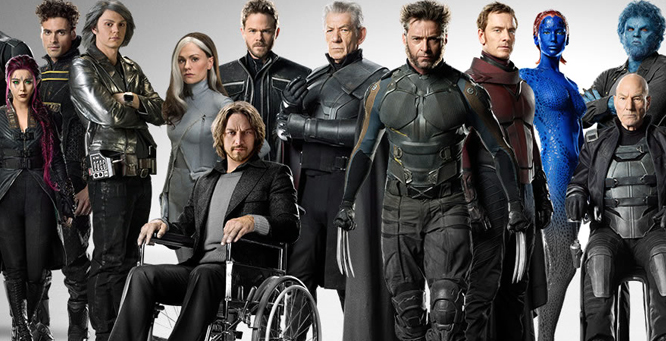
Societal reflections: X-Men
I caught the boat very late on the X-Men film series, only watching them for the first time in the summer of last year. I’ve no doubt irritated many people (“how good are the X-Men films?” “We know, we watched them 15 years ago…”), but apart from being great films they also offer some great themes and concepts. If we discovered mutants in our society today, how would we (and they) react? Would there still be hostilities?
All of this is, of course, hypothetical. It’s difficult in some respects to gauge the potential level of hostility, but at best I think the human race would still be suspicious. Donald Trump wants to build a wall in Mexico to keep out illegal immigrants: imagine what he’d think of mutants? Given the abilities of many mutants in the X-Men franchise, you can imagine politicians of all stripes being suspicious.
In the UK, I can imagine Nigel Farage and UKIP getting straight on it. “These mutants are coming over here, taking our jobs...I mean abilities...and thirty million of them are coming from Romania. The EU is clearly doing a cover up operation, and Jean-Claude Juncker is clearly a mutant…”. The Conservatives would want to limit mutants to the “tens of thousands”, whilst Boris Johnson would have a field day trying to remember the names of Erik Lehnsherr, Ororo Monroe and Raven Darkholme.
The above paragraph was satirical fun. However, there would be some serious soul searching in the event of mutants existing. Given the abilities of the likes of Charles Xavier, Magneto and Mystique, there would be legitimate concerns over civil liberties. We would recoil at the thought of someone being able to read minds or influence people. Imagine trying to lock up someone who can manipulate magnetic fields, or someone who can shapeshift into the likeness of anyone?
The effect could be a never-ending cycle: mutants lash out because they feel threatened by humans, and vice versa. It would need the integrity and intelligence of someone like Charles Xavier to build bridges on both sides, but in that context it could be the humans turn to harm civil liberties; I can’t imagine authoritarian regimes in the world being happy with Professor X having freedom. Positives would have to be stressed on both sides. Imagine (humanely) harnessing Wolverine’s regenerative abilities to ease the strain on the NHS? Perhaps Storm could create weather patterns to provide water for drought-stricken countries? I can imagine leading authorities wanting to use Professor X for infiltrating the intelligence of terrorists by using Cerebro. The potential is clear.
Nevertheless, there’s no guarantee that mutants would be on board for being ‘used’ in this way. Magneto was based on Malcolm X, and there’s little doubt that there would be a real world equivalent of both. Depending on mutant numbers, there could even be political insurgencies in certain countries (the ‘Brotherhood of Mutants’ certainly sounds like a political party). Perhaps there could even be a mutant independence movement?
Human nature can certainly be cruel. I’m sure we’d all love to think that we wouldn’t act like a Senator Kelly or William Stryker if mutants did exist, but in practice I’m sure we’d at the very least be cautious. I’d like to hope that we wouldn’t choose divide and rule, but rather would accept one another as equals (I’m sorry that sounds cheesy). However, even everyday life could be altered drastically; imagine a mutant with Charles Xavier’s abilities sitting a GCSE exam, or a Magneto-like figure who is frustrated with a traffic jam on the way to work?
I don’t think I’ve done enough justice to this hypothetical topic. There are so many variables that come into play, and so much is dependent on how each side would react. The X-Men films are probably pretty accurate depictions of what would happen if mutants existed: human suspicions of mutants would lead to mutants lashing out, whilst peaceful mutants acting for the greater good would help to convince some humans that they can coexist with mutants. What is clear is that the X-Men series has clear allegories about human behavior and the treatment of minorities: you would hope that humans would ultimately be compassionate and reasonable in the event of mutants reaching out.
Thursday, 28 January 2016
Inverted snobbery on education
I couldn’t help but groan when I heard of the petition against Damian Lewis attending the 50th anniversary of Acland Burghley comprehensive school in London. I believe that it should be about where someone is going in life, not where they’ve come from. By trying to take a stance against Lewis’ Eton-educated background, the signers of this petition have become snobs.
I hate to play the ‘I went to a comprehensive’ card, as Owen Jones often does. I’m very proud of my schooling, and I consider it a badge of honour because of the quality of teaching that I had there, not because I think it gives me a pass to talk about social justice or inequality. I’m not better qualified to talk about abstract concepts like ‘fairness’ and ‘opportunity’ just because I went to a comprehensive, otherwise I’m no different from the “reproduction of privilege and inequality in the UK” that the petition attacks Lewis for.
Personally, I’d be chuffed if an actor of Damian Lewis’ calibre came to my old school to give a talk. I think some people use the educational background of an individual very elastically indeed to suit their own arguments. David Cameron would be an easy target; “of course he hates the poor, he’s from a privileged background”, yet the same people who make that argument would never say “Clement Attlee did so much for this country; it’s just a shame that he went to a private school”. Arguments could be made about having less empathy due to a privileged background, but I believe that it is a separate debate (and one that can be unfairly skewed).
Kudos must go to Headmaster Nicholas John for refusing to bow to pressure. The assertion in the petition that Damian Lewis is a “wholly inappropriate choice” is lamentable. I think the argument is lost twofold; if you take an absolutist position that anyone from a private school background would be ‘wholly inappropriate’ for these kind of events, then in theory should David Cameron not visit any secondary schools (and therefore just open himself up further to any accusations that he doesn’t care)? If you take an elastic position on the subject, then you’re open to the double standards that I’ve listed above.
I’m as uncomfortable as anyone with the tendency for private schools to dominate in the social mobility and employment stakes. That doesn’t mean that we should succumb to snobbery, the very vice that this petition criticises Eton for. There are solutions to tackling inequality and to levelling the playing field. Refusing people the right to speak at events because of their background is not one of them.
Friday, 22 January 2016
John Williams: My top 5 themes
John Williams is, quite simply, a genius. He has composed some of the most iconic film scores, and his music is synonymous with the films that he has scored for. It’s surely the sign of a great composer that their music is subject to association of thought. Darth Vader? The Imperial March will immediately come into your head. Harry Potter? The magical tones of Hedwig’s Theme will sound in your head. Indiana Jones, Superman, Jaws...the list goes on.
I have crudely assembled my own personal top five favourite John Williams film scores. For the musical experts out there, I apologise for my less than eloquent descriptions.
5) The Raiders March: Indiana Jones
This theme just feels so appropriate for the genre and era that it is set in. Indiana Jones is a swashbuckling hero, and Harrison Ford deserves a swashbuckling leitmotif. The theme was originally in two parts, but director Steven Spielberg asked for a combined result instead. John Williams doesn’t ever shoehorn in The Raiders March (which must be tempting), and it feels epic hearing it in multiple contexts; when Indy and company are heading off into the sunset on horseback (Last Crusade), or when they’re beating up the bad guys against the odds (Temple of Doom). I even liked it during the end scene of Kingdom of the Crystal Skull (time to put the tin hat on: I actually didn’t mind the fourth one).
4) Star Wars main theme: Star Wars
My boyish excitement was alive and well when I went to watch The Force Awakens. Seeing “A long time ago, in a galaxy far, far away…” light up on the big screen massively heightened my anticipation for the opening notes of the Star Wars main theme. The tune is so recognisable that the vast majority of non-fans can still place the theme to the film. This theme perfectly sets the scene and hints at the adventure to come, and I love the continuity of having the opening crawl of text (accompanied by this theme) throughout the entire franchise. Imagine hearing a rousing rendition of this at a huge concert hall!
3) Journey to the Island: Jurassic Park
This theme is played throughout the entire Jurassic Park franchise, and is otherwise recognised when played in the first film as the helicopter approaches Isla Nublar (“you’ll recognise it when you hear it”). I love how brash and grand the spectacle of it is, which is appropriate given that there are living, breathing dinosaurs on show. I feel that this theme neatly encapsulates how Jurassic Park very much isn’t a horror/blood and gore film. There’s a triumph to this piece of music; just think of the T-Rex v Raptors scene in the first film. My one regret with it is that it’s only used very briefly in Jurassic World (for a helicopter scene, of course), but thank goodness that successive composers (after The Lost World: Jurassic Park) have stuck with it.
2) Jurassic Park theme: Jurassic Park
A contrast to the Journey to the Island theme (especially when you hear the soft piano version). I think it captures the majesty and wonder of the dinosaurs, and is a grand theme for when Dr Grant and company first see a Brachiosaurus in the park. It also settles the pace down after the T-Rex attack, when Alan, Lex and Tim find shelter in the trees amongst the Sauropods. I did have a little lump in the throat when the theme first started up in Jurassic World as the tourists approach Isla Nublar, and the notes to the theme are hinted at beautifully throughout the film. I love each version of it, whether it’s the poignancy of the slow tempo and soft rendition or the building crescendo of the original use of the theme.
1) Binary Sunset/The Force theme: Star Wars
I always get goosebumps whenever I hear this beautiful piece of music. I still get goosebumps even when hearing it on the Family Guy spoof of A New Hope. It’s the most common theme throughout the Star Wars films, and rightly so. It’s first played in A New Hope when Luke looks at the two suns from his home in Tatooine, frustrated at being stuck on the desert planet. Whilst the notion of isolation and frustration is the first association of the theme, I think part of what makes it so special is that it can mean different things to different people (sorry if that’s a horrible cliché). It’s played in various contexts of the franchise, such as Obi Wan’s imminent victory over Darth Maul in The Phantom Menace or Han Solo’s “it’s true; all of it” speech about the force in The Force Awakens. The poignancy of the theme is what sticks with me, and it always seems to go hand in hand with the more emotional moments in the franchise. I think I have something in my eye whenever it plays...
Honourable mentions:
Hedwig’s Theme: Harry Potter
It was hard to omit this one, especially as it was a classic of a theme to grow up with. Once again, John Williams perfectly composes a genre-appropriate musical cue.
The Imperial March: Star Wars
Darth Vader’s hugely famous leitmotif was perhaps too obvious an entry to put into my top five (but it’s still a great theme).
Duel of the Fates: Star Wars
One of the better products of the prequel trilogy, and the vocals are fantastic. John Williams’ scores cannot be faulted in George Lucas’ very flawed prequels, and this theme is part of the only cool bit in The Phantom Menace: Obi Wan Kenobi and Qui-Gon Jinn taking on Darth Maul.
Subscribe to:
Posts (Atom)