Saturday, 12 November 2016

Thank you, Barack Obama


Donald Trump's victory in the US Presidential election is still an immensely difficult pill to swallow. Not only has America elected a bigoted thug as President, but they have denied the country the services of a talented and dedicated politician in Hillary Clinton. Worse still, the legacy of Barack Obama is at risk.

I feel privileged to have witnessed history in the making back in 2008/2009. It was in sixth form that I first took an interest in politics, and it was US politics that I got into first. I was studying the US Civil Rights movement, just as America elected their first ever African-American President. I remember the buzz and excitement of "yes we can", along with Obama's inspirational inauguration speech. He didn't overplay the race card, but poignantly remarked:
This is the meaning of our liberty and our creed, why men and women and children of every race and every faith can join in celebration across this magnificent mall; and why a man whose father less than 60 years ago might not have been served in a local restaurant can now stand before you to take a most sacred oath.
Boy are we going to miss him. Expectations were sky high, but given just how much his hands were tied, he left a remarkable legacy. Let's not forget the worst financial crisis since the Great Depression, where the Republican Party essentially said "now you sort it out". Let's also not forget how Obama lost his supermajority in the Senate and the House of Representatives in the 2010 midterms, where Senate minority leader Mitch McConnell said "the single most important thing we want to achieve is for President Obama to be a one-term President". Obama also lost the Senate in the 2014 mid-terms, and throughout his entire Presidency he's been met with obstruction and intransigence from the GOP and rabid Tea Party.

With that backdrop in mind, look at what he has achieved. Fulfilling a campaign promise, Obama comprehensively overhauled healthcare, giving insurance to millions of people who previously did not have it. Crucially, 'Obamacare' outlawed insurance companies from denying healthcare coverage to people based on pre-existing health conditions. Obamacare is still a far cry from what we're used to with the NHS in Britain, but it's still a massive leap forward for the American model.

Let's also look at the economy. Unemployment in the US is now at 4.9%, down from highs of nearly 10% around the start of Obama's first term (source: http://historyinpieces.com/research/us-unemployment-rates-president). Given how wrecked the economy was when he took over, unemployment fell steadily throughout his two terms. I remarked in 2012 that the unemployment figures were "stubbornly high" at the end of Obama's first term (7.9%), so a reduction of 3% in four years isn't bad going. Obama's stimulus package in 2009 also shored up the economy, along with his auto bailout in Detroit (remember Mitt Romney's "let Detroit go bankrupt" quote?). The Obama administration also brought in much needed banking regulation via 'The Volcker Rule', which restricted certain kinds of speculative investments.

Furthermore, Obama repealed 'don't ask, don't tell' in 2010, meaning that the LGBT community could serve openly in the US military - another key measure for fairness and justice. He signed executive orders to ban torture methods such as waterboarding, and he somehow maintained a pluralist tone in the face of Republican opposition. Obama didn't deliver in every area; he failed to close Guantanamo Bay, for example. However, with his hands tied behind his back most of the time, his Presidency was a good one.

Had Hillary Clinton won, she would have maintained much of the Obama legacy, and it would've been the first time since 1940 that the Democrats had won three consecutive elections. It's such a pity that Donald Trump pledges to undo much of what Obama achieved. I'm pleasantly surprised (though sceptical) that Trump has now come out and said that the key Obamacare provisions will remain, despite previously pledging to repeal it. I got it badly wrong when I predicted in 2012 that the GOP would have to moderate their approach to win another election:
Obama has forced the Republican Party to rethink their policies and positions; lurching rightwards is not the answer to clinching those crucial swing states.
Barack Obama's oratory power was extraordinary, but he had the concrete policies to back it up. He had charisma, but also an approachable nature which is rare in politicians. He saw off the war hero John McCain in 2008, and the serial flip-flopper Mitt Romney in 2012. He's left with a beautiful family, and maybe a 2020 Presidential contender in Michelle Obama. From a man inspired by his Presidency, I'd like to say: thank you, President Obama.

Photo credit: Huffington Post

Saturday, 5 November 2016

The best candidate, not the lesser of two evils


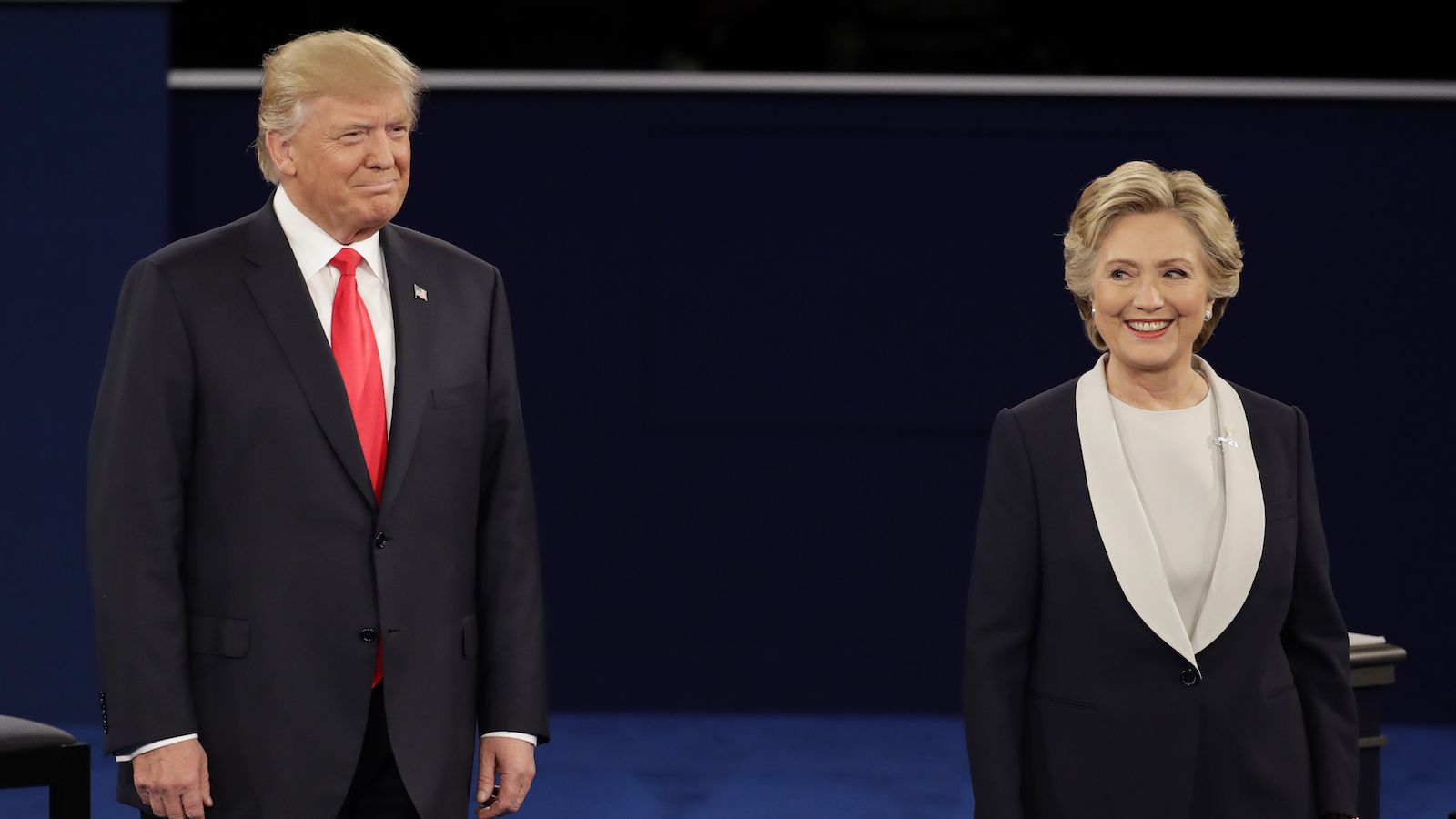
Election day in America is drawing closer, yet I'm still perplexed at the popular narrative that a vote for Hillary Clinton is a "lesser of two evils", something to be done whilst holding your nose. Clinton has her flaws, but I've no doubt in my mind that she absolutely must be elected President.

I seem to be one of the few people who actually likes Hillary. Whilst not inspiring, her pragmatic approach in the Democratic primaries made sense, given how both the House and Senate are controlled by the Republican Party (that could change on election day). Unlike many in my age demographic, I wanted her to win the nomination rather than Bernie Sanders. I admire her public service, and how she has stood up for the rights of women across the globe. Crucially in an election, she is very experienced in political affairs, a fact which is unfortunately being used against her in the "clean up Washington" mantras of disaffected voters.

The polls are tight, but if Clinton wins this will be the first time the Democrats have won three consecutive elections since the FDR era (see the 1940 US election). In my post-2012 election blog entry, I noted the following:

Having suffered a second consecutive election defeat (and with no landslide victory since the Ronald Reagan era), Obama has forced the Republican Party to rethink their policies and positions; lurching rightwards is not the answer to clinching those crucial swing states
Let's now look to Donald Trump, and see how laughably wrong my prediction was. There's almost no need for repetition of the things that Trump has said and stands for, yet people forget or conveniently ignore the following:

I would build a great wall, and nobody builds walls better than me. Believe me. And I’ll build it very inexpensively. I’ll build a great, great wall on our southern border and I will have Mexico pay for that wall. Mark my words.
When Mexico sends its people, they're not sending their best. They're not sending you. They're not sending you. They're sending people that have lots of problems, and they're bringing those problems with us. They're bringing drugs. They're bringing crime. They're rapists. And some, I assume, are good people.
Donald J Trump is calling for a total and complete shutdown of Muslims entering the United States, until our country’s representatives can figure out what the hell is going on.
I did try and f*** her, she was married...when you're a star you can do anything
 They are just a few of the awful things that Trump has said, and clearly believes in. I may be pointing out the bleeding obvious to some people, yet there's still a Trump delusion. On BBC Question Time on Thursday 3rd November, panellist Charlie Wolf was asked "is Clinton just as bad as Trump?" His response? "She's worse". I'm not giving Wolf the "entitled to his opinion/each to their own" shtick; he's utterly delusional. Even if you took away all of Trump's horrendous comments about minorities, the disabled and women, where's the political experience? Americans are being asked to elect the most powerful figure on the planet - do they really think Trump is the best equipped candidate?

The paradoxes don't stop there. There is, quite rightly, no compulsion on Christians as to who they should vote for in an election. However, I'm gobsmacked that Trump is somehow perceived as the more 'Christian candidate', or rather the candidate that Christians 'should' vote for in America. You can't cast the first stone by attacking Clinton on abortion rights, then ignore Trump's infidelities and attitudes towards women. Pat Robertson is one of the most extreme examples of delusional counter points for Trump, defending Trump's remarks as "macho talk". I want to stress that I'm not labelling Clinton "the more Christian candidate"; such labels are always dangerous and unhelpful in elections, and should be avoided. I'm merely pointing out that there's a plank of wood in the eyes of those who theologically denounce one candidate whilst ignoring the significant character flaws in another candidate.

I thought the Republicans couldn't get any worse with their candidates after serial flip-flopper Mitt Romney. I would have enthusiastically supported Clinton for President whoever had been the Republican nominee (that's not out of mindless tribalism: look at who the other contenders were). The situation is that much more crucial because of Trump. Had Romney won in 2012, or John McCain in 2008, I think the US would have been worse for it, but you could make arguments that they wouldn't have been disasters. If Trump wins, it will be a disaster for the US, and the rest of the world as a knock-on effect.

In case you still think there's some kind of equivalence or 'two evils' here, let Seth Meyers balance out the flaws in each candidate for you:

Do you pick someone who’s under federal investigation for using a private email server?

Or do you pick someone who called Mexicans rapists, claimed the president was born in Kenya, proposed banning an entire religion from entering the US, mocked a disabled reporter, said John McCain wasn’t a war hero because he was captured, attacked the parents of a fallen soldier, bragged about committing sexual assault, was accused by 12 women of committing sexual assault, said some of those women weren’t attractive for him to sexually assault, said more countries should get nukes, said that he would force the military to commit war crimes, said a judge was biased because his parents were Mexicans, said women should be punished for having abortions, incited violence at his rallies, called global warming a hoax perpetrated by the Chinese, called for his opponent to be jailed, declared bankruptcy six times, bragged about not paying income taxes, stiffed his contractors and employees, lost a billion dollars in one year, scammed customers at his fake university, bought a six-foot-tall painting of himself with money from his fake foundation, has a trial for fraud coming up in November, insulted an opponent’s looks, insulted an opponent’s wife’s looks, and bragged about grabbing women by the pussy?

How do you choose?


Photo credit: Quartz

Monday, 10 October 2016

My top 10 superhero themes


I’m an admittedly recent convert to the superhero genre, but for me the music in a superhero film (or any film) is vital. Associating a theme with a film and vice versa is a huge mark of success, and it’s an achievement that I think is more difficult in many cases for superhero films. 


My list is a personal choice, so don’t be shocked or offended at my selections (which do much to play up to my Marvel fanboy inclinations):


10) Dark Knight Trilogy (2005-2012): Hans Zimmer

The mob would have been after me had I not included this one. The darker tones of this theme perfectly reflect the Christopher Nolan style of the Dark Knight trilogy. I prefer Marvel over DC (don’t shoot), but there’s no denying the craft of Nolan’s vision across the whole trilogy, and Han Zimmer’s score is the icing on the cake.


9) Superman theme (1978-1987) John Williams

If this were a top 10 ‘iconic’ superhero themes, the Superman theme would be far higher. It’s right that Man of Steel and Batman versus Superman had a darker portrayal of Kal-El/Clark Kent, but it’s such a shame that the 21st century adaptations were so far away from the light-hearted nature of the original Christopher Reeve films (which this theme encapsulates well). Quite simply, John Williams is a genius, and this theme is one of a significant catalogue of classic themes that he’s composed.


8) Iron Man 3 theme (2013) Brian Tyler


A surprising addition to the list, I always think it’s difficult for a theme to stand out when it’s used only once in a series of films. Far more orchestral than the previous two Iron Man themes, this theme stuck with me when I first heard it: it’s more serious in tone to reflect Tony Stark’s struggle with PTSD, but nevertheless still has a triumphant nature to it, which is emphasised when all of Tony’s suits come to the rescue at the film’s denouement.


7) Iron Man theme (2008) Ramin Djawadi


When I finally gave the MCU a chance last year, my introduction was Iron Man. Fortunately, the experience was a good one. I love how the electric guitar takes precedence in this theme, fitting in well with Tony Stark’s rebellious, Black Sabbath-influenced nature. Some superhero films can be a bit too serious when they get to the ‘first suit-up/display of powers’ scene, but Iron Man gets it right when it shows you Stark’s joy at fly testing the Mark 2 suit for the first time, with this theme neatly sending up a playful emotion.


6) Captain America: Civil War theme (2016) Henry Jackman

Henry Jackman features regularly in this list, and with good reason. The airport battle scene is epic enough in this film, but Jackman’s score does a good gradual build up as ‘Team Iron Man’ and ‘Team Captain America’ run towards each other for a comic book smash up. When both teams do battle, the score is dramatic but not triumphant; the somewhat mournful tone reflects the fact that former friends are now fighting each other. The score isn’t all doom and gloom, however. The tone of the music is briefly lighter again whenever Ant Man features in the battle (got to love Paul Rudd).


5) Captain America: The Winter Soldier theme (2014) Henry Jackman


“Captain America: he’s cool now”, is how the humorous Honest Trailer Youtube series sums up The Winter Soldier. I feel that The First Avenger is still an underrated MCU film, but there’s no doubt that The Winter Soldier shifts it up a gear. The film feels more like a spy thriller at times than a superhero film, and bearing in mind that Steve Rogers is taking down HYDRA (a Nazi-death cult), it’s therefore appropriate that this theme is somewhat dramatic. The theme is very well placed just after the elevator breakout scene - it’s a massive break from the (arguably) more sidelined role of Steve Rogers in the first Avengers film.


4) Spiderman theme (2002-2007) Danny Elfman

Just as some superhero films are too serious, some are also too cartoony and childlike: the Tobey Maguire Spiderman trilogy gave us a memorable theme tune that is more sombre than many superhero iterations, which is an important aspect given the struggles that Peter Parker has to go through. Danny Elfman’s theme is still quickly paced, however - the webslinger needs to travel in a hurry.

The Amazing Spiderman’s two films (2012 and 2014), sadly, didn’t give us a memorable theme like this one.


3) Magneto’s theme/Frankenstein’s Monster (X Men: First Class 2011) Henry Jackman


Epic movie scenes inevitably include epic movie scores. Jackman’s score ramps up the tension perfectly when a young Magneto confronts two ex-Nazis in a bar. The theme is repeated on a regular basis throughout First Class, but it never gets dull or annoying; Jackman varies the use of instruments on each occasion. The X-Men film series has had quite a few different composers, so not many of the themes have been retained for more than one film: it’s a pity that ‘Frankenstein’s Monster’ has yet to be reused.


2) The Avengers theme (2012 & 2015) Alan Silvestri


You can’t beat a good old triumphant movie score. Alan Silvestri already has the Back to the Future theme under his belt, and I love The Avengers theme. Comic book stories and films can be dark (see DC), complex (see The X-Men) and even joyless (see Batman versus Superman), but a lot of the time they just need to be fun. The Avengers is a format based on a collection of comic book heroes at the end of the day - there’s no shame in playing up to the geeky nature of it!

Who doesn’t go full on fanboy/fangirl when this theme kicks in during 2012’s The Avengers?

Captain America: Dr Banner, now might be a good time for you to get angry

The Hulk: That’s my secret Captain: I’m always angry

[Cue epic shot, epic theme and group shot]

I was so pleased that this theme was reused in Age of Ultron (slightly modified), and with Silvestri’s return to the MCU there’s no doubt that it’ll feature again during Infinity War.


1) X Men theme (X2, DOFP and Apocalypse) John Ottman

I absolutely love this theme. The original X-Men trilogy (2000-2006) had a separate composer for each film, and had the franchise stopped in 2006 it would have missed a signature theme. Fortunately, John Ottman’s enduring collaboration with Bryan Singer meant that this brilliant theme made a comeback in Days of Future Past and Apocalypse. The other X-Men themes are by no means poor, but John Ottman’s score really stands out.


The adrenaline really kicks in when this scene goes in tandem with the familiar circular opening titles. How can a mood-setting monologue by Sir Patrick Stewart not lead into a memorable theme? There are slight variations in how Ottman plays the theme in each film, but each iteration captures the genre perfectly.


Disclaimer: I do not own any of the copyright of these videos - all rights belong to the relevant composers/film companies/production companies/Youtube accounts. I am not making a profit out of this - it is for entertainment purposes only. No copyright infringement is intended.

Thursday, 6 October 2016

Where next for the centre-left?


Guest post - by Charles Britten

My thanks go to Ben once again for letting me loose on this blog. As ever, my attempt to offer a helicopter view of the political landscape is not necessarily from the centre-left, but this post will be specifically about the centre-left. 

The position of the centre-left in Britain - whether you describe it as liberal, social democratic or 'third way' - has gone from one of dominance to the wilderness with bewildering speed over the past few years. It is worth considering just what has happened. With the advent of New Labour and the electoral advances of the Liberal Democrats, the centre-left gained a stranglehold on British politics that lasted for nearly 20 years. From the mid-1990s it was clear Labour's shift from Clause IV socialism had chimed with the public, aided by a Conservative government riven with divisions over Europe and tired after many years in office. Even after new Labour's historic three terms in office ended in 2010, the Liberal Democrats were able to continue the centre-left involvement in government, albeit as a junior partner to the Conservatives.

In view of this, what has happened last year and this has been nothing short of a collapse. Ben and his Liberal Democrat colleagues could at least say they saw last year's election drubbing coming, as the inevitable disappointments of government alienated many supporters and also lost those who prefer to deliver a protest vote to someone who will actually get their hands dirty with the hard decisions of office. Even in view of all that, however, to be reduced to just eight MPs was worse than anyone had envisaged. For Labour, the situation has arguably been even more shocking. With Ed Miliband declaring New Labour to be dead but unable to offer a clear vision of what 'next Labour' was about, knowing a leftward-swing was electoral suicide but mindful of the discrediting of the Blair and Brown legacy, the party could not win an election it had once thought was there for the taking. Not only did it collapse in Scotland; it made little headway in England and lost ground to the Conservatives in Wales. The last factor went largely un-noticed by commentators distracted by events in Scotland, but it was significant nonetheless, with seats like Gower turning blue for the first time ever and former safe Labour strongholds like Bridgend becoming marginals. 

In Scotland, of course, all the unionist parties were left as helpless as King Canute before the tsunami of identity politics in the aftermath of the independence referendum, but the SNP was also able to make hay by embracing some specific causes associated with the left of the Labour Party, such as opposition to austerity and Trident. (Of course, in true SNP style they neglected to mention their preference for the George Osborne approach to corporation tax, having pledged in the 2014 white paper that they would set the rate in an independent Scotland permanently lower than in the remaining UK). The loss of its Scottish base was a big enough blow; one that places a question over Labour's ability to win a majority ever again as long as Scotland is part of the UK. But the election and recent re-election of Jeremy Corbyn has ripped open a gaping hole between the centre-left and the left. Most of the MPs are in the former camp, most of the members in the latter. Of course, it must be noted that whatever anyone's views on Corbyn, he has won fair and square and by big margins under the party's rules. That he was placed on the ballot by MPs who would never support him - in the hope of consoling the left with a voice in the debate before he dropped back into obscurity - demonstrated a miscalculation of how vulnerable the centre-left had become. 

The crisis is now extremely deep. The attempt to overturn last year's result came to nothing and Owen Smith's line was as left-wing was in any case Corbyn's on many issues. The Labour Party's future for the next few years is set in stone; Corbyn will lead them into the next election at the behest of a party that has rejected the centre-left position that gave it both its only election victories since flares were in fashion, and longest period in power ever. Instead, the membership seems dead-set on a course that is fiercely ideological, aggressively dismissive of all opposition and determined to act as a social protest movement against the modern world, whether or not this ambition gets them anywhere near the levers of government that would allow them to genuinely affect it. 

So how can the centre-left respond? The Labour leadership election gained all the media attention in a week when most people would barely have noticed the Liberal Democrat conference was going on anyway. Yet plenty of people in both parties can be forgiven for feeling bewildered at the collapse of centre-left influence in Britain, not least given the added blow of Brexit. Indeed, the latter factor reflects the fact that the third largest party in terms of popular support remains UKIP, even though they ought to have the biggest question mark over their future of any party, having now achieved the goal they were formed for and seemingly unable to elect a leader amid the Diane James' fiasco and punch-ups between the other candidates. The question is, where now? With hopes that the centre-left might avoid marginalisation in the Labour Party fading away - as evidenced by the iron fist under the velvet glove of Corbyn's declaration that "the vast majority" of MPs need not fear deselection - the question arises over whether the so-called Blairites will stay and fight, or split. If the latter, there are several historical precedents. 

The split of 1931 is the least relevant, as it involved a Labour prime minister leaving his own party behind and kicking it out of government as he formed a coalition with the Tories. More relevant is the 1981 case, where the SDP formed a party whose key points of difference with Labour were essentially the same issues - Europe, defence, the unions - that Blair subsequently won the argument over inside the Labour Party in the 1990s. However, anyone wishing to join such a body might as well join the Liberal Democrats, rather than repeating the messy exercise of arranging an alliance first and then merging two parties later. If they do not stay or join forces with the Liberal Democrats, a third possibility is that a tiny fringe of disaffected MPs might form an alternative Labour grouping and stand as such, like the Independent Democratic Labour Party label under which Dick Taverne won Lincoln in February 1974, only to lose the seat back to his old party in the second election of that year. His example, however, would also indicate that such an approach will not work in the long-term, and a lasting alternative must be found; Taverne eventually joined the SDP and is now a Liberal Democrat peer. 

The reality is there will probably be no move en masse by those on the right of Labour, with some staying, some jumping ship and others simply quitting in disgust. The problem for those who would consider a Liberal Democrat defection is it would mean doing so when their new party would be at its weakest in a generation. While it is, of course, numerically evident that if all or most of those Labour MPs who expressed no confidence in Corbyn jumped ship they could immediately make Tim Farron leader of the opposition, their emotional commitment to Labour and determination not to let Corbyn and Momentum reign unchallenged will act as a deterrent. This means that if any do defect, their numbers will likely be very small and of little lasting significance. Moreover, if there are significant deselections, these may make up a disproportionate number of those switching sides, as they will have so much less to lose. 

All this might sound like an unremittingly gloomy situation for the centre-left. Indeed, it may be for the next few years. The Conservatives will be the obvious beneficiaries of an unelectable opposition; after all, even if the economy or other issues provide deep problems as a result of Brexit, they could argue with at least qualified justification that they are dealing with a problem the electorate themselves chose to have. Moreover, there could be a real trap for anyone in the Labour or Liberal Democrat parties persisting in calling for another referendum before Brexit. To some, such a pledge will simply sound like a rejection of a democratic mandate and would be a gift to UKIP's propagandists. Moreover, as Owen Smith - an advocate of a second plebiscite - will now know, sometimes a second vote only strengthens your opponent's position. Tempting as the idea is to some, any attempt to block Brexit in parliament would be even more counterproductive; what bigger gift to those voicing UKIP's favoured narrative than to offer them prima facie evidence that 'the establishment' is seeking to overturn the will of the people? Such a move would not help neither the centre-left or the centre-right, but it would turn large areas of the electoral map purple come 2020. 

A wiser approach over Europe would be for the centre-left to take a more pragmatic attitude, as advocates of retaining single market membership, for example, while also being a little patient and willing to offer a future, post-Brexit referendum on rejoining the EU. This could be a clear and viable election manifesto pledge, one that will accept that the will of the majority was to leave, but is also willing to offer the people a chance to change that decision when they have seen what the reality of life after Brexit is like. Moreover, by then UKIP might have faded enough to lose their one MP and much of their vote. Some may regard that approach to Brexit as a surrender and too cautious, but it should be stressed that it is in the interests of the centre-left to take stock after the calamities of recent years. After all, this is not just a British phenomenon; social democratic parties all around Europe have been doing poorly of late. This is an issue that requires plenty of sensible planning and long-term thinking, not just reflex retreats to long-standing policy positions.

 Of course, being out of office means that exactly this kind of rethinking can be afforded, and time is certainly a plentiful commodity for those on the centre-left. For one thing, they are not the ones who will have to take the decisions in government over Brexit. Talk of an early election is risible, and, one suspects, often wishful thinking from Labour MPs hoping an early defeat would prompt Corbyn to quit. From Theresa May's point of view, such an election would force the Conservatives to nail their positions on various Brexit-related issues to the mast before the difficult internal debate has been settled (though for some Conservatives, it never will be), while the temptation to allow Corbyn longer to wreck Labour instead of inflicting a defeat that could finally unseat him must be irresistible. 

Moreover, there is another good reason to sit back, grab some popcorn and watch the unfolding Labour mayhem. Sooner or later Labour under Corbyn and McDonnell must show their own hand as to what they envisages a post-Brexit country and economy will look like. At the Labour conference this week, McDonnell talked about the "opportunities" Brexit offered. While Theresa May's conference speech hinted at a 'soft' Brexit involving some form of involvement with the single market, McDonnell used his own address to stress what he saw as the advantages of being outside it. That should alert sharp minds to the reality that few on the hard left have had anything more than a skin-deep commitment to the EU, and many have had anything but. 

This is not limited to Corbyn's lukewarm attitude, but the reality that the left of the Labour party has historically been deeply eurosceptic. True, this was only reflected in a handful of Labour MPs voting for Brexit this time, including a couple on the right of the party like Frank Field and Gisela Stuart, but Dennis Skinner was a clear representative of this tradition. Had they still been around, Tony Benn and Michael Foot - the chief Brexiteers in the Labour cabinet of 1975 referendum - would have cheered Corbyn's ascent and the vote on June 23rd with equal joy. Moreover, the level of visible euroscepticism in the Labour Party was diluted during the Blair years as many of the most anti-European left-wing MPs and former MPs left altogether and set up their own parties. Prominent examples of this include staunch Brexiteers like George Galloway and founder of the Trade Union and Socialist Coalition Dave Nellist. All this means that, soon enough, there will probably be a clear split between those on the left of the Labour Party happily embracing Brexit and those on the right still keen on a European future. It will make unifying the party even harder. 

However central the European question will be in the coming years, that will not be the only one for the centre-left to take stock on. As mentioned above, there may be a realignment of the centre-left, albeit a small affair, but one on which the dust will need to settle. Another issue is that of austerity, the post-crash narrative that has been watered down now Philip Hammond is in charge of the Treasury and Brexit offers a perfect excuse to rip up the old plans. Not only would austerity lite make the arguments over cuts less potent; in time the books will be sufficiently balanced to take it out of the equation. In simple terms, provided the economy doesn't tank after Brexit, there will come a time when the relevant discussion will no longer feature emotive talk about 'fighting cuts', but be about how to spend sensibly without running up another huge deficit. In other words, the foundations of the conversation will be more favourable to the political centre than now. 

However, the most important thing to recognise over all is that the wider political narrative has changed dramatically, because of the sense that a 'neoliberal' approach adopted across the political spectrum has failed many people. It is precisely this that has led to a range of radical reactions, from the rise of nationalism in Scotland to Labour's leftward lurch and, of course, the Brexit vote. It is important for those on the centre-left - in Britain and elsewhere - to work out just how to respond to a changing world and the widespread dissatisfaction so many feel with it. The emerging Conservative approach under Mrs May has been to talk tougher on immigration while promising to tackle "dysfunctional" markets like housing with more government intervention, abandoning the mantra of "you can't buck the market" that had held sway from Thatcher onwards. This sea change in thinking about the role of the state is perhaps more significant than many realise, for it is a recognition that the ideas that had been held true across the political centre have fallen out of favour. This, then, is the Conservative response, rooted in the beliefs of a leader whose inspiration is Joseph Chamberlain, not Friedrich Hayek. Perhaps it was appropriate that she delivered her speech in Birmingham.

 The centre-left now needs to reconsider its own philosophical approach and how this may be reflected in policy terms. In what ways can the centre-left advocate more interventionism itself while remaining distanced from the hard left? To ignore the question will mean no alternative being offered to the Corbynites. Meeting it head-on with practical ideas and answers for the circumstances Britain and the world now faces will be the start of the road back. A key issue in this is where Labour goes in the future. If it loses the next election as badly as expected, it may start a repeat of the long process that followed its 1983 debacle. If not, it will drift increasingly into the wilderness. UKIP may consider itself a potential opposition, with lofty dreams of hoovering up disaffected working-class votes from Labour in its former industrial heartlands, but its post-Brexit future will probably be that of an anti-immigration party with a visceral appeal most will find even more toxic than Nigel Farage's pre-referendum poster - and that's if it can survive at all. Given the in-fighting (sometimes literal), that must be in some doubt. If all that offers a boon for the Conservatives under Mrs May in the short term, the longer term will be different. Every government has it's sell-by date, the point after which it ceases to function well irrespective of the merits or flaws of its policy programme. Desire for a change will arise. That could take quite a few years, though maybe less if the party still cannot stop - in David Cameron's words - "banging on about Europe". 

Even if the Tories stay in power for some time, there will still need to be a credible opposition. Given the electoral alternatives of perpetual power for a centre right/right party, or supporting a declining, squabbling anti-immigration party whose historic mission has come and gone, or a hard-left party that is loved fanatically by a few and disdained by the many, the eventual re-emergence of an electorally credible centre-left party or parties must surely happen. The question is whether it will be a recovering Liberal Democrats, or a fresh incarnation of New Labour.

Photo credit: publicinterest.org.uk 

Saturday, 24 September 2016

Labour isn't serious about power - how can it be?


Jeremy Corbyn has won in his battle to keep hold of the Labour leadership, and by an increased margin. You will notice a constant refrain from Corbynites now: he has a democratic mandate, he increased his vote share, loads of people turn up to his rallies, he doesn't wear a tie etc. The increased mandate, as impressive as it is within one particular party, makes one thing clear: Labour aren't bothered about winning elections anymore.

A blame figure for Labour's woes is the party itself, not just Corbyn. Had the party nominated who it really wanted in 2015, Corbyn would've had no chance of getting on the ballot. Instead, people who would never vote/support Corbyn (as has been proved) patronisingly got him on the ballot to 'broaden the terms of the debate'. You can therefore empathise, to a degree, with Corbyn activists who didn't want to be treated as little children.

Labour hasn't got a chance of winning with Corbyn as leader, whatever dubious graphs Eoin Clarke may provide. "But no one thought Corbyn would be Labour leader..." many people cry. That much is true, but when will Corbynites realise that gaining a big (cult) following within a particular party does not equate to an endorsement from the general public (i.e. the ones who decide elections)? Echo chambers are misleading: a leader of a left wing party is likely to attract people to rallies, but that means preaching to the converted. Jeremy Corbyn's recent Sheffield rally didn't stop Labour losing a safe council seat to the Liberal Democrats in the same area weeks later.

"At least Corbyn stands by what he believes in..." Really? For a CND and Stop the War veteran, it's a pretty big failure to passively accept his party's refusal to endorse the abolition of Trident Deeper insights into Corbyn's character have been done to death, but I think it's desperately sad that people who have given their lives to Labour have been demonised and scorned by Corbynites, many of whom haven't even supported the party for very long.

Corbyn isn't totally to blame. The party failed its mission in 2015: the opposition should have wiped the floor with the Government, given the scale of spending cuts that were made. However, the poll figures will only get worse (and they're pretty dire now) whilst the party continues to hold contempt for the rest of the country's viewpoints.

The result of the continued Corbyn experiment will be an even bigger Conservative majority, and this approach puzzles me: surely Labour's goals are to put principles in to practice and to stop a Conservative Government from being a reality? I'm still devastated about the country's decision to vote Brexit, and I'm appalled at the vested interests of ministers such as Liam Fox, who are ideologically determined to fulfil their own agendas rather than do what's best for the country.

I get no joy from Labour's woes, even though it is heresy as an under-25 year old citizen to criticise Corbyn. Right now, we have a Government which is smug (with reasons to be smug) and complacent. We deserve an effective opposition which can hold to account the banal creed that is "Brexit means Brexit". Sadly, the way things are going we won't get that effective opposition from Labour in 2020.

Photo credit: Getty

Thursday, 30 June 2016

David Cameron: the nearly man


During the 2015 General Election campaign, David Cameron told the BBC's James Landale that he would not seek a third term as Prime Minister. After the unexpected Conservative victory in May 2015 and the election of Jeremy Corbyn as Labour leader, it looked like Cameron was going to have a smooth ride. Instead, the Brexit vote last week means that the Prime Minister's record is now tainted.

DC was so nearly the first Prime Minister to leave of his own free will since Harold Wilson (you may suggest Tony Blair had that luxury, but he was under enormous pressure to quit). A 'Remain' vote could have been the culmination of his goal years ago as leader of the opposition to "stop banging on about Europe". Instead, Cameron joins Mrs Thatcher (the poll tax) and Tony Blair (Iraq) in having a toxic legacy. He put his "heart and soul" in to keeping Britain inside the European Union, but his referendum gamble didn't pay off.

In truth, DC would have been under pressure to go early even in the event of a 'Remain' vote, as his quarrelsome backbenchers would have inevitably  kicked up a stink over the terms of his renegotiation with the European Union. This only adds to my view that the Conservatives are a somewhat ungrateful party:

Ted Heath unexpectedly won the 1970 Election and led his party to support remaining in the EEC: dumped.

Margaret Thatcher won three landslide election victories: dumped.

John Major unexpectedly won the 1992 Election: given hell.

David Cameron unexpectedly won the 2015 Election: given hell and forced out.

For all of his foibles, I had confidence in Cameron as Prime Minister. Whenever anyone (inevitably the far Left) demanded his resignation, I pointed out that any replacement would be worse, not better. DC once said that he's "not a deeply ideological person", which many not sound inspiring to some, but is a welcome relief to others who have lived under fierce ideological battles. The list of candidates for the Tory leadership (and therefore Prime Minister) are hardly encouraging: Theresa May, Michael Gove, Liam Fox, Stephen Crabb and Andrea Leadsom. Against expectations, DC's main rival Boris Johnson has announced that he won't stand for the leadership. Stephen Crabb appears closest to continuing DC's 'One Nation' Toryism, but he has question marks over his connection to gay 'cure' groups. DC would never come out with awful rhetoric on immigration as Nigel Farage does, nor as a Conservative is he anywhere near the hateful bile of Donald Trump in America (I maintain that DC would be a Democrat).

DC so nearly built a potent Tory legacy: he led the first Coalition government since the war, defeated electoral reform in 2011, cut taxes for low paid workers, prevented a Labour-SNP alliance and significantly reduced the budget deficit. As a pragmatist who isn't very ideological, he was never going to win friends. From the Left, his spending cuts across the board and reforms to welfare attracted ire, and from the Right he was lambasted for not doing enough on immigration, governing with the Liberal Democrats, and of course not 'standing up to Europe'.

DC's goal of 'detoxifying' the Tory brand was only partially achieved in 2010, and his victory in 2015 was more a result of fearing the SNP and Labour than vindicating DC's premiership. The Conservatives remain a bitter and divided party, and one that is sure to be disappointed when they realise that their expectations on immigration will be curtailed. DC's referendum offer in the last Parliament was borne out of placating his backbenchers and UKIP voters, but such a move ultimately went against the national interest.

History may look kindly upon DC in the future if his successors mess things up, but his reckless gamble on Britain's future with the European Union backfired, and that sadly will be Mr Cameron's lasting legacy.

Picture copyright: www.pinknews.co.uk

Tuesday, 7 June 2016

Britain is better off IN the EU


I stand by the arguments I made during the General Election last year on the EU: the Conservative plan for an In/Out referendum was too arbitrary and full of vested interests. I raised concerns that the move was simply to placate troublesome Tory backbenchers, and predicted that much of the next Parliament would be taken up by lengthy negotiations and infighting (sound familiar?). I was happy to stand by the Liberal Democrat policy of having an In/Out referendum when a new treaty change was proposed, rather than on an arbitrary date. However, the referendum is nearly here. We have the opportunity to either put to bed a long standing question, or take a dangerous leap in to the unknown.

'Project Fear' is always a sad reflection on British politics, especially when there is a positive case for staying in the EU, which needs to be heralded loud and clear. In the globalised world that we live in, freedom of movement is ultimately a good thing. We haven't had a war in Europe since 1945, due in no small part to European cooperation. A great deal of our trade is with Europe (almost 45% of our exports are with other EU member states, and 53% of imports are from the EU). The EU gave a directive to paid holiday leave across member states. We have a rebate on our EU contributions, and surely you pay to join a club for benefits other than money in your pocket?

Unfortunately, elements of 'Project Fear' are sometimes necessary. It is a leap in to the unknown to leave the EU, and it's foolish to think that the day after a Brexit vote we'll suddenly be unshackled from the EU. Too much of this Parliament has been taken up by EU negotiations; do we really want the latter part of it to be taken up by similar moves? Norway and Switzerland still pay in to the EU budget to gain access to the single market, proof that we can't wave a magic wand after voting Brexit.

British politics is odd at the moment: SNP figures are talking about being better together, whilst some Unionists are saying that we can forge our own destiny. Neoliberal free marketeers are saying how we can spend the money saved in the event of a Brexit on the NHS, whilst previously (and probably secretly still) Eurosceptic Jeremy Corbyn has outlined the socialist case for staying in the EU. Inevitably, the EU referendum has come down to a fight between the economy ('In') and immigration ('Out'); if the immigration argument leads the campaign, then I fear a Brexit vote. To those who lambaste EU migration, I cannot stress enough how it is a net positive for our economy, and it works both ways: what about the UN estimate of 1.2 million Brits living in other EU countries?

Of course the EU needs to be better. For a University exam, I had to revise how a bill becomes law in the EU, and the process is needlessly tedious: the European Council set the agenda, the European Commission has a monopoly on introducing new laws, which are then debated between the European Parliament and the Council of the EU, before being voted on. This all sounds too much like Monty Python's Life of Brian, where the confusion is over whether the name is the 'Judean People's Front' or the 'People's Front of Judea'. Three Presidents (one each for the European Council, European Commission and European Parliament) is far too many. However, these are reasons to reform the EU and make it better, rather than to petulantly leave it.

Ultimately, it will be my generation that has to deal with the effects of a Brexit, which is why it is so important for the youth demographic to get out and vote. I'll sum up my reasons for an 'In' vote like this: we get a good deal out of the EU, and can make it better; an 'Out' vote is a stab in the dark and leaves us poorer economically and in terms of influence.

This isn't a General Election, where you can vote for an alternative if you're not happy. We're bound by the result of this referendum, and the consequences. Please vote to stay in the European Union.


Picture copyright: www.zimbio.com and www.strongerin.co.uk